STORE FINDER


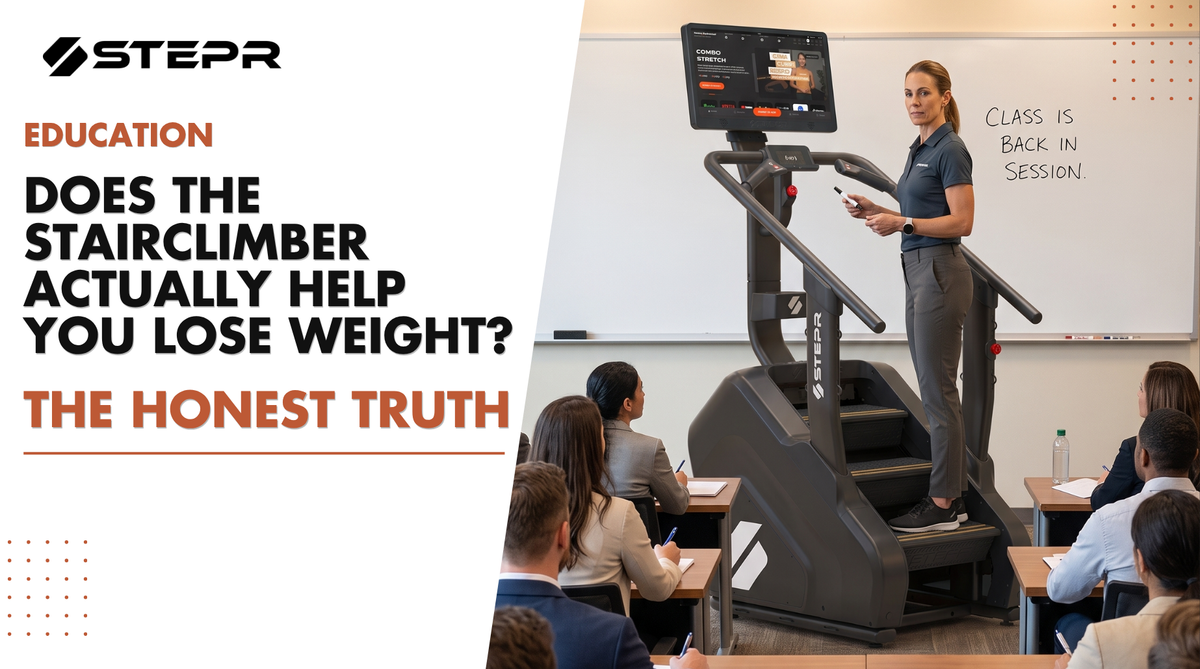
Does the stair climber actually help you lose weight? The honest truth.
What the stair climber actually burns
The American Council on Exercise puts the 30 minute calorie burn for a 150 pound person on a stair climber at around 272 calories. Harvard Health Publishing's data for a 185 pound person puts it at 252 calories for the same duration.
These numbers matter because they are honest. Not inflated. Not the peak effort figures that fitness marketing tends to use.
Compare that to 30 minutes of brisk flat walking at 4 miles per hour, which burns around 170 calories for the same 150 pound person. Add an incline and that number climbs, but research published in Women's Health in September 2026 confirmed what most gym regulars already assumed: the stair climber produces a higher calorie burn than treadmill incline walking at the same effort, because lifting your body vertically with each step demands more from your cardiovascular system than walking forward on an angled surface.
For weight loss, that gap compounds. Three sessions per week at 272 calories per session is 816 calories of additional weekly deficit. Over four weeks, that is over 3,000 calories. Roughly one pound of fat, from cardio alone, without changing anything else.

Why the weight loss persona gets this wrong
Most people trying to lose weight make one of two mistakes on the stair climber.
The first is intensity. They get on, go hard for 10 minutes, and step off exhausted. High intensity effort feels productive. But for fat oxidation, sustained moderate effort outperforms short hard bursts. Your body burns a higher proportion of fat as fuel at moderate intensity than at maximum effort, where carbohydrates dominate. A 35 minute session at a pace where you can still talk, though not comfortably, burns more total fat than a 10 minute sprint and exit.
The second mistake is inconsistency. The stair climber is one of the most abandoned pieces of gym equipment, not because it does not work, but because people use it too hard, too early, your legs get cooked and then you avoid it. Starting at resistance levels that are genuinely sustainable, sessions you would repeat the next day without dreading it, is how the progress actually builds and the results start to show.
The research is consistent on this: the type of cardio that produces weight loss is the type you actually do. Consistently. Over weeks and months. Not the type that produces the most suffering per session.
What the August 2026 study confirmed
A systematic review published in August 2026, covering nine studies and 480,479 participants followed for a median of 14 years, found that people who climbed stairs regularly had a 39% lower risk of dying from cardiovascular disease and a 24% lower risk of dying from any cause, compared to those who climbed stairs less often.
The sweet spot in the data was around six flights of stairs per day, roughly 60 to 70 steps. Not a structured workout. Just regular stair use.
For the weight loss buyer, that finding is relevant beyond the headline number. Cardiovascular fitness and fat loss are connected. As cardiovascular fitness improves, your body becomes more efficient at using fat as fuel during exercise and at rest. Every improvement in your aerobic capacity from stair climbing sessions directly supports your fat loss goal, not just during the session, but across the day.
A 2007 study found that low volume stair climbing in sedentary individuals improved VO2 max by 9.4 percent. Better aerobic capacity means more fat burned across every activity you do, not just when you are on the machine.

The body composition angle most people miss
Weight loss and fat loss are not the same thing.
A scale can drop because you lost water, or muscle, or fat. The goal is fat loss specifically, with muscle preservation. That distinction matters because muscle mass drives your resting metabolic rate. Lose muscle, and your body burns fewer calories at rest, which makes maintaining any weight loss harder.
Stair climbing sits at a useful intersection for this. It is cardiovascular training that produces a calorie deficit, but it also recruits the glutes, quads, hamstrings, and calves under meaningful load. The muscle engagement is not the same as a dedicated strength programme, but it is more than cycling or walking. The posterior chain, the largest muscle group in the human body, is working every single step.
The result is that stair climbing supports fat loss without the muscle wasting risk that very high volume, low intensity cardio can produce. The resistance you set on a STEPR stair climber directly influences how much muscular demand accompanies the cardiovascular work. Higher resistance means more posterior chain engagement alongside the calorie burn.
 How to structure a fat loss protocol
This is the practical section. Not a complicated programme. A simple structure that the research supports.
Three to four sessions per week. The fat loss research supports this frequency. Daily sessions are not necessary and can lessen your recovery, which then affects consistency.
30 to 45 minutes per session. This is the window where fat oxidation is meaningful and the session is completable without excessive fatigue that discourages the next session.
Moderate resistance, steady pace. The pace where you can speak in short sentences but would prefer not to. This is Zone 2, the fat burning aerobic zone. Not strolling. Not gasping.
Progressive resistance, not progressive suffering. Every two weeks, increase the resistance setting by one or two levels. The progression keeps your fat burning without requiring more time.
Pair with your existing structure. If you lift twice a week, put stair climber sessions on non lifting days. If you do nothing currently, stair climber sessions three times a week is a complete cardio programme.
The STEPR PRO+ gives you on demand workouts, streaming services, scenic sessions, 25 speed levels and more to dial this in precisely. Oh and no subscription means no monthly cost pushing against the family budget while you're building the habit. You step on, complete the session, step off. Workout done.
The honest comparison to other home cardio options
| Machine | 30 min calorie burn (150 lb) | Posterior chain | Impact | Plateau risk |
|---|---|---|---|---|
| Stair climber (STEPR) | ~272 | High | Low | Low |
| Treadmill flat | ~170 | Low | Medium-High | Medium |
| Treadmill incline | ~200-240 | Medium | Low-Medium | Higher |
| Exercise bike | ~210 | Low | None | Medium |
| Elliptical | ~200 | Medium | None | Medium |
The stair climber wins on calorie burn and posterior chain engagement simultaneously. It is lower impact than running. And unlike a stationary bike or elliptical, the movement pattern directly addresses the glute and hip function that desk based lifestyles degrade.
For the STEPR range, the stair climber is the weight loss product. The STEPR GO is the entry point, purpose built for someone starting their fat loss journey with a 5.2" step height. The STEPR PRO+ is the longer term investment, with the 7" step height, versatility and build quality to stay relevant as your fitness improves.

What real results actually look like
The stair climber is not a transformation machine on its own. No cardio tool is.
What it is: the most efficient fat burning cardio available, for someone who needs low impact, wants real calorie burn, and wants to see the glute and leg changes that come with posterior chain engagement.
Three sessions per week, 35 minutes each, at moderate resistance, sustained for 12 weeks, creates a meaningful calorie deficit. Combined with protein intake at or above 0.7 grams per pound of body weight, that deficit produces real, measured fat loss without muscle loss.
The STEPR 45-7-6 workout protocol, detailed in this STEPR blog, gives a specific session structure built around the research, if you want a ready made programme rather than building your own.
The honest answer to whether the stair climber helps you lose weight: yes, reliably, if you use it consistently at the right intensity. It is not complicated. It just requires showing up three times a week.
Frequently Asked Questions:
How many calories does a stair climber burn in 30 minutes?
A 150 pound person burns approximately 272 calories in 30 minutes on a stair climber, according to the American Council on Exercise. A 185 pound person burns around 252 calories in the same time, per Harvard Health Publishing. Actual burn varies with resistance level, step pace, and body weight.
Is the stair climber good for losing belly fat?
Stair climbing burns calories and reduces overall body fat, including visceral abdominal fat, when used consistently with a calorie deficit. No exercise targets belly fat specifically. Three to four weekly sessions at moderate intensity, combined with a modest dietary deficit, produces measurable fat loss across the body over eight to twelve weeks.
How often should I use a stair climber to lose weight?
Three to four sessions per week of 30 to 45 minutes at moderate resistance is the evidence supported frequency for fat loss cardio. Daily sessions are not necessary and can reduce consistency by causing fatigue or burnout. Two sessions per week maintains fitness; three to four sessions per week drives fat loss.
Is the stair climber better than walking on a treadmill for weight loss?
Yes, in most comparisons. A 150 pound person burns around 272 calories on a stair climber versus 170 calories on a flat treadmill in 30 minutes. Stair climbing also recruits more posterior chain muscle mass, which increases metabolic demand. With incline added to a treadmill, the gap narrows, but stair climbing generally produces higher calorie burn per minute.
Does the stair climber tone your glutes and legs?
Stair climbing recruits the glutes, quads, and hamstrings significantly with each step, which produces a toning and strengthening stimulus in the lower body alongside the cardiovascular benefits. Higher resistance settings increase muscular demand. Beginners typically see visible lower body changes within six to eight weeks of consistent use.
Explore the Full STEPR Range | Find out about VPR Technology | FREE STEPR Matchmaking Quiz | Discover More STEPR Blogs and Helpful Tips | Find A Store Near You
[Or Click the Button Below to Shop Now]

The information in this article is intended strictly for educational and informational purposes and does not constitute medical advice, diagnosis, or treatment. Always seek the guidance of a licensed physician, physical therapist, or qualified healthcare provider regarding any medical condition or before making changes to your training regimen. Individual fitness results may vary based on effort, consistency, and health history.
STEPR Blog posts

Win an $8,000 Sisu Sauna With Any STEPR Purchase This October Only
Any STEPR purchase this month enters you into the draw for a Sisu barrel sauna worth over $8,000. Here is who this giveaway is built for and how to train and recover with both.
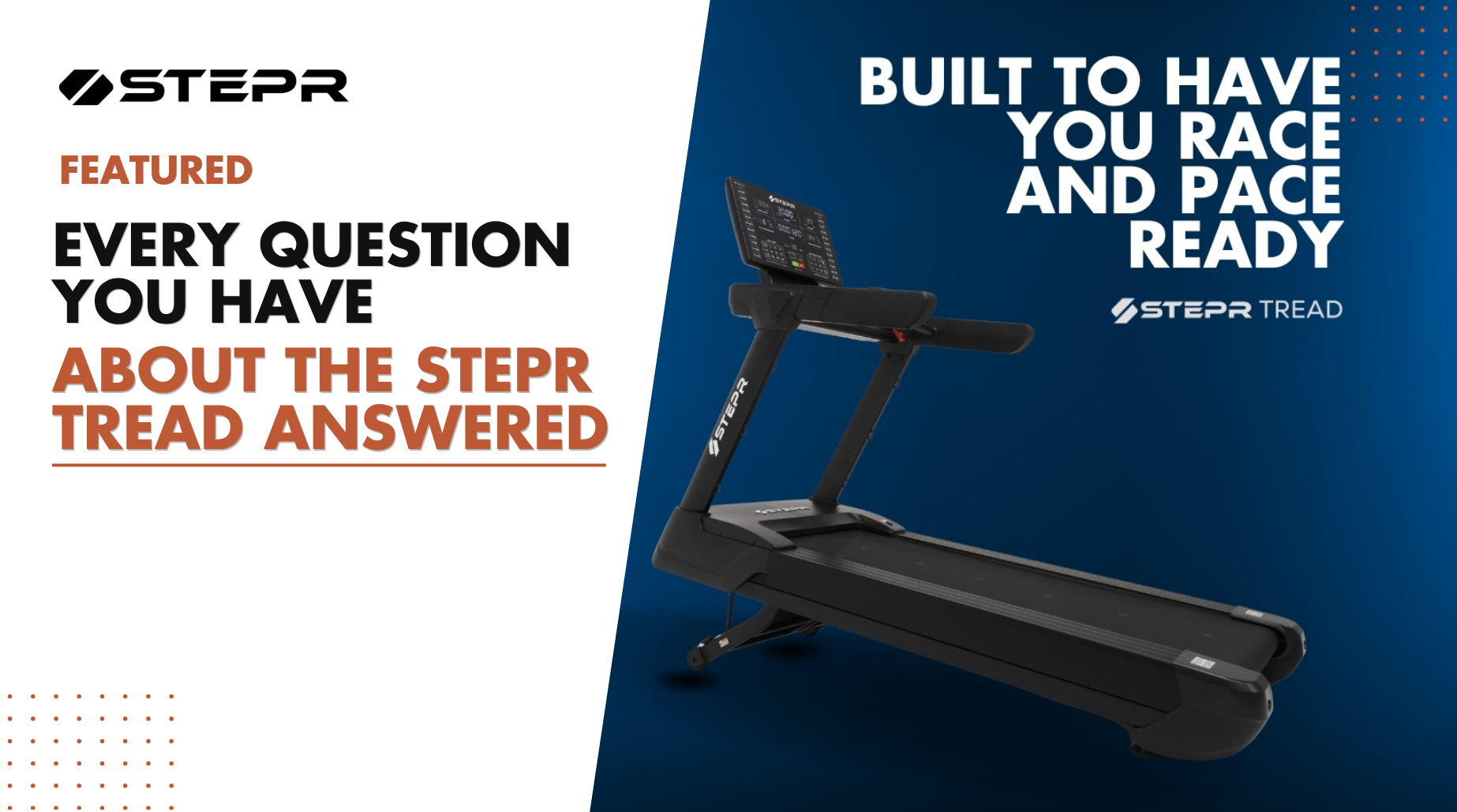
Every Question You Have About the STEPR TREAD Answered
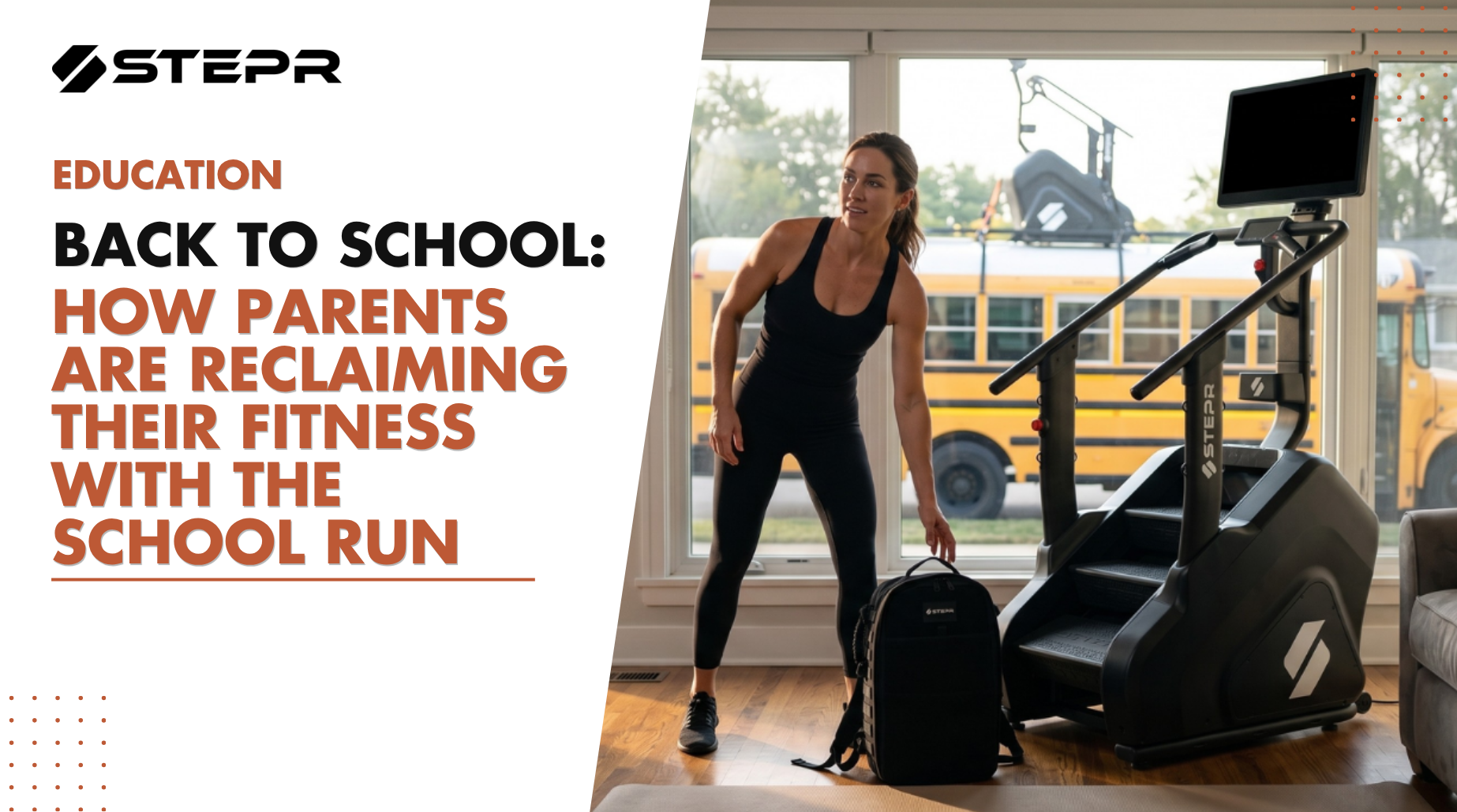
Back to School: How Parents Are Reclaiming Their Fitness With the School Run

The Equipment System Cameron Hanes and Joe Rogan Actually Workout With
Joe Rogan called it "the Echo Bike, but times two." Now Cameron Hanes is training with STEPR VPR™ in a hypoxic wellness studio. Here is what they are using and why the world's most relentless athletes keep choosing it.
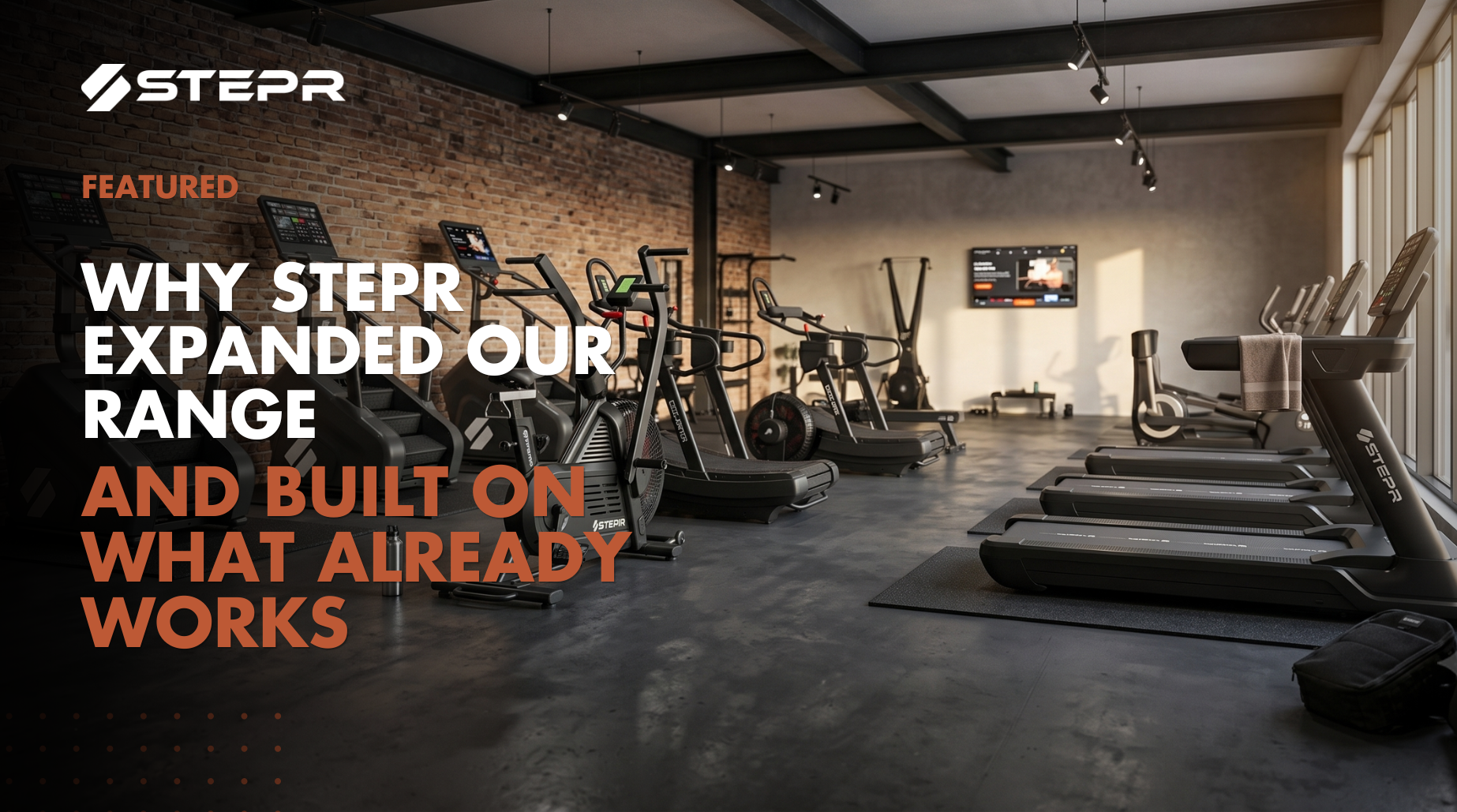
Why STEPR Expanded our Range and Built on What Already Works
STEPR was built on a simple premise: the most effective training modalities already exist. The question was never "what to invent from scratch" it was "how do we bring genuine innovation to what already works". Here is why the range looks the way it does.
Home Cardio Machines: Why Value Beats Price Every Time
Why the Stair Climber Is the Hybrid Athlete's Secret Weapon
STEPR Community Surpasses 500 Million Steps: A Milestone Worth Celebrating
Why the UFL Chose STEPR to Train Its Professional Athletes
The 45-7-6 Stair Climber Workout: What the Science Says

It's Our Anniversary: Celebrating STEPR's Biggest Birthday Yet