STORE FINDER


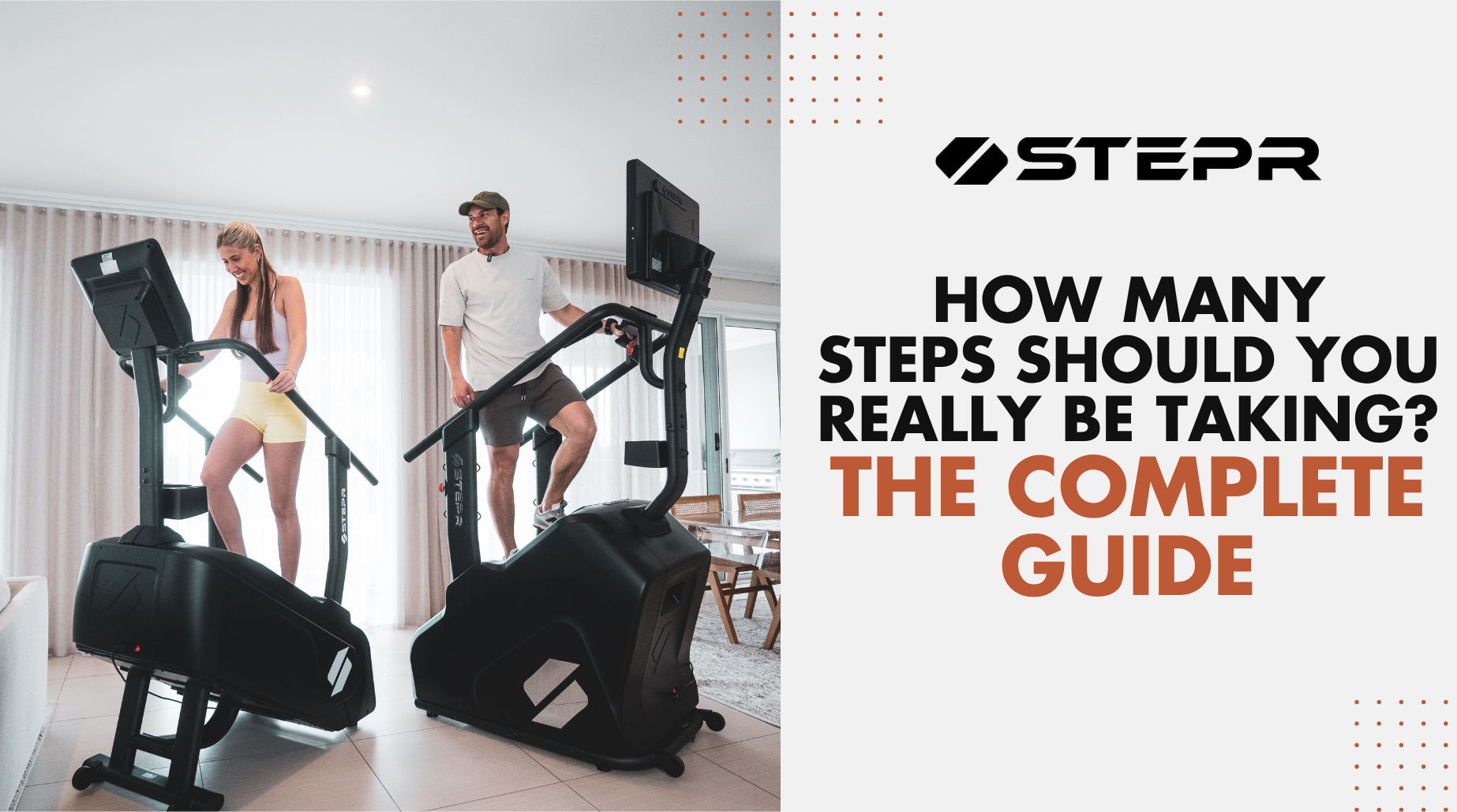
How Many Steps Should You Really Be Taking? The Complete Guide
The 10,000 steps goal was invented by a Japanese pedometer company in 1965. It was a marketing slogan, not a medical recommendation. Not a clinical finding. A brand name, Manpo kei, which translates loosely to "10,000 steps meter."
And yet for six decades, it has shaped how millions of people measure their daily movement.
The truth is more interesting. The optimal step count depends on who you are, how old you are, what your body is recovering from, what are your fitness goals, and critically, what type of steps you're actually taking. A step up a stair and a step across a flat floor are not the same. Not even close.
Here's what the research actually says.

The baseline: what most adults actually need
The landmark science on step counts has shifted meaningfully in the last five years. A 2024 meta analysis published in The Lancet Public Health confirmed that 7,000 steps per day is associated with clinically meaningful improvements in health outcomes for most adults. A separate Harvard backed study found that women walking around 4,000 steps per day already showed significantly improved longevity compared to those moving less.
The takeaway isn't that 10,000 steps is wrong. It's that the threshold for benefit is lower than you think and the target above that threshold should be calibrated to your life, not to a 1960s marketing stunt. Here's how that breaks down by age group.
 Step targets by age and gender:
Teens (13 to 18): Research consistently shows adolescents benefit from higher daily movement than adults. Recommended targets sit between 12,000 and 16,000 steps per day, with boys typically recording higher natural counts than girls. Physical education, sport, and unstructured movement all contribute. The goal at this age isn't just fitness, it's building bone density, cardiovascular foundation, and the habit of movement before life gets more sedentary.
Adults in their 20s and 30s: This is peak physical capacity for most people, and the research supports pushing higher. A target of 8,000 to 12,000 steps per day aligns with health maintenance, performance, and body composition goals. Men in this bracket tend to average slightly higher counts naturally, but the performance gap narrows significantly among active women. If weight loss is the goal, 10,000 to 12,000 steps becomes the meaningful floor, not the ceiling.
Adults in their 40s and 50s: Metabolism begins to shift. Recovery takes longer. The research here is particularly compelling: consistent 7,000 to 10,000 daily steps in midlife is associated with significantly reduced risk of metabolic syndrome, cardiovascular disease, and early cognitive decline. Women in perimenopause and menopause benefit from consistent daily step accumulation partly because it supports hormonal regulation and bone maintenance. Areas where incline and stair based movement offer a structural advantage over flat walking.
Adults 60 and over: A 2024 study of nearly 6,000 women aged 63 to 99 found that just 3,600 steps per day at a normal pace was associated with a 26% lower risk of developing heart failure. The research from The Lancet confirms that the dose response curve remains steep at this age, every additional 1,000 steps matters. A realistic and highly beneficial target for active older adults is 6,000 to 8,000 steps per day. The quality of those steps matters enormously at this stage.

Step targets by goal and life stage:
The athlete: Competitive and performance focused athletes accumulate daily step counts that most people would find staggering. Elite distance runners cover the equivalent of 15,000 to 20,000+ steps per day when training volumes are accounted for. For athletes using STEPR as part of cross training or conditioning, elevated step counts compound the training stimulus significantly. The same 20,000 steps at incline generates a cardiovascular and muscular load that would be impossible to replicate on flat ground.
The purpose driven trainer: Personal trainers, group fitness instructors, and active coaches often accumulate 12,000 to 15,000 steps through work alone. The challenge for this group isn't hitting the number, it's ensuring the quality of movement is contributing to their own fitness, not just their clients'. Intentional elevated step sessions on STEPR create dedicated training time that passive floor walking simply cannot match.
The military and defence professional: Military fitness standards require sustained high output movement across variable terrain. Daily step targets for active duty personnel regularly exceed 15,000, with field exercises pushing well beyond that. For veterans and reservists maintaining readiness, 12,000 to 15,000 quality steps per day is a meaningful baseline. The functional demand of military movement makes incline based training directly transferable to operational capacity.
The home fitness enthusiast and remote or rural buyer: These are the people who understand that access determines consistency. If your gym is a 40 minute round trip, your training frequency suffers. Research consistently shows that home based equipment dramatically increases adherence to exercise programmes. A target of 8,000 to 10,000 daily steps, achievable entirely on a home STEPR, becomes genuinely attainable.
The weight loss goal: The research on steps and weight loss is encouraging, but specific. Studies suggest that consistently exceeding 10,000 to 12,000 steps per day is where the weight management benefits become more pronounced for most adults. However, this changes dramatically when you shift from flat to inclined movement, a point addressed in detail below.
The business owner and desk bound professional: Sedentary workers average between 3,000 and 5,000 steps per day, less than half the recommended minimum. The research on movement snacking shows meaningful cardiovascular benefit from even 10 minute step sessions across a work day. For business owners with compressed schedules, a high quality 20 minute STEPR session that equates to significantly more than 20 flat minutes of walking changes your results entirely.
During pregnancy: The American College of Obstetricians and Gynecologists recommends 150 minutes of moderate intensity activity per week during an uncomplicated pregnancy, roughly equivalent to 7,000 to 8,000 steps per day. Women who maintained consistent movement during pregnancy showed improved gestational weight outcomes and faster postpartum recovery. Lower intensity incline walking on a step climber, particularly in the first and second trimester, can be a highly effective and joint friendly way to maintain these targets.
The postpartum mum: The postnatal period is one of the most physically demanding and under supported stages of adult life. Research published in PubMed confirmed that pedometer based step interventions in postpartum women effectively reduced retained gestational weight and improved body composition. A gradual return to 8,000 to 10,000 daily steps, starting from 4,000 to 5,000 in the first weeks is a research backed approach. Low impact, joint conscious movement is critical here, stair climbing at moderate pace provides the cardiovascular and lower body engagement needed without the impact load of running.
The outdoor enthusiast: Hikers, trail runners, and outdoors focused movers accumulate step counts naturally but inconsistently. A daily STEPR practice at home maintains cardiovascular and lower body conditioning between outdoor sessions, ensuring the body stays prepared for technical terrain. For this group, a target of 10,000 to 15,000 steps, with a significant proportion at incline, reflects both capacity and performance goals.

Why not all steps are equal:
Here is the piece most step tracking conversations miss entirely.
When your fitness tracker counts 10,000 steps, it doesn't distinguish between 10,000 steps across a flat office floor and 10,000 steps climbing stairs. But your body feels the difference. Dramatically.
The measurement unit scientists use to compare exercise intensity is MET: Metabolic Equivalent of Task. A MET of 1 is resting. Brisk flat walking registers approximately a 3.5 MET. Stair climbing registers between an 8 and 9 MET. That's more than double the cardiovascular and metabolic demand per minute of movement which is amazing for such a low impact modality.
The caloric difference is similarly striking. Research published in the National Library of Medicine found that a 10% incline increases metabolic cost by 113% compared to flat walking at the same speed. A 5% incline adds 52%. Each 1% of grade increase adds approximately 12% more caloric expenditure. The mechanism is straightforward: every step upward requires your body to move its full weight against gravity. Flat walking doesn't ask that of you.
Muscle activation tells the same story. Incline walking and stair climbing disproportionately engage the glutes, hamstrings, and calves, the posterior chain that flat walking largely leaves under stimulated. This is why people who walk 15,000 flat steps daily can still struggle with glute activation and lower body strength deficits. The steps are there. The stimulus isn't.

How STEPR steps compare to flat walking:
Stair climbing on STEPR registers at 8 to 9 METs versus the 3.5 METs of brisk flat walking. That means a single step on STEPR carries more than twice the cardiovascular load of a step on flat ground.
Translate this to a practical comparison: a 30 minute STEPR session at moderate intensity delivers a cardiovascular and caloric stimulus equivalent to approximately 60 to 70 minutes of brisk flat walking. Research on stair climbing versus walking found that just five flights of stairs per day (around 50 steps) reduced cardiovascular disease risk by over 20%. That is not 10,000 steps. That is 50.
For caloric burn, stair climbing on a step machine burns roughly 0.17 calories per ascending step. Flat walking burns approximately 0.05 calories per step at a comparable pace. That's more than three times the energy expenditure per step. So when someone tracks 3,000 STEPR steps in a session, they are generating the physiological equivalent of 9,000 to 10,000 flat steps or more, depending on pace and resistance. Another element to mention is that the STEPR range has a difference in step heights of 5.2", 7" and 9" to add further caloric burn and customisation to the way you train.
This reframes the step target conversation entirely. If your goal is 10,000 quality steps per day and you have limited time, 30 minutes on STEPR isn't a partial effort. It's active efficiency.
The bottom line on your daily target:
There is no single number that is right for every person reading this. There is a number that is right for you, shaped by your age, your goals, your recovery state, and what kind of steps you're willing to put in. What the research makes clear is that more steps are better than fewer, elevated steps are better than flat ones, and consistency beats perfection every time.
The person who hits 6,000 elevated steps on STEPR every single day is doing more meaningful work than the person who aims for 10,000 flat steps.
The tool you use to move, determines the value of the movement provided to your body.

Frequently Asked Questions:
Is 10,000 steps per day still the right target?
For most healthy adults aged 20 to 55, 10,000 steps per day remains a reasonable and positive health target. However, recent research published in The Lancet Public Health confirms that 7,000 steps per day is already associated with clinically meaningful improvements in health outcomes. For older adults and those with certain health conditions, 6,000 to 7,000 steps has been shown to deliver substantial cardiovascular benefit. The 10,000 step figure originated from a 1965 Japanese marketing campaign, not clinical research.
How many steps should women aim for compared to men?
The research shows no significant difference in the health benefits associated with step count targets between men and women at any given number. What does differ is baseline activity levels: men on average record slightly higher daily step counts than women across most demographics, though the gap is narrowing. Women in pre menopause and post menopause may benefit from prioritising the quality and intensity of steps rather than purely the quantity, as incline based movement supports bone density and hormonal regulation in ways flat walking does not.
Do stair climbing steps count the same as regular walking steps?
They count the same on a fitness tracker, but they are not physiologically equivalent. Stair climbing registers at 8 to 9 METs versus 3.5 METs for brisk flat walking, more than double the cardiovascular and metabolic demand per step. Research shows stair climbing burns over three times more calories per step than flat walking. A 30 minute STEPR session produces a cardiovascular output equivalent to 60 to 70 minutes of brisk flat walking, making it one of the most time efficient, step based workouts available.
How many steps should I aim for if my goal is weight loss?
Research supports a daily step target of 10,000 to 12,000 for meaningful weight management on flat ground. However, if a significant portion of your daily steps involves incline or stair climbing, the threshold drops considerably. Because of the dramatically higher caloric expenditure per step at incline, 6,000 to 8,000 elevated steps per day can produce comparable or superior weight loss outcomes to 12,000 flat steps. The key variable isn't the number displayed on your tracker, it's the total energy expenditure and the muscle recruitment driving those steps.
What is the recommended step count for pregnant women?
The American College of Obstetricians and Gynecologists recommends 150 minutes of moderate intensity activity per week during uncomplicated pregnancies, which corresponds to approximately 7,000 to 8,000 steps per day. Low impact movement such as walking and lower intensity stair climbing is generally considered safe and beneficial through most of pregnancy, subject to individual medical guidance. Always consult your healthcare provider before beginning or continuing any exercise programme during pregnancy.
How many steps should a postpartum woman be taking?
Research published in PubMed supports a gradual return to movement, beginning with 4,000 to 5,000 steps daily in the early weeks postpartum and building to 8,000 to 10,000 steps by the 6 to 12 week mark, depending on birth recovery and medical clearance. Stair climbing at a gentle pace provides the cardiovascular and lower body stimulus needed for postpartum recovery without the joint load of running or high impact exercise.
How many steps per day does an athlete need?
Elite and highly competitive athletes typically accumulate 15,000 to 20,000 or more steps per day across training, warm up, and recovery movement. The key for performance athletes is not just volume but intensity distribution, a high proportion of elevated, resistance varied steps drives more physiological adaptation than the same number of passive flat steps. STEPR's adjustable resistance and step height allow athletes to calibrate elevated step training to their specific conditioning phase.
Does step count matter more than workout intensity?
Both matter, and they serve different functions. Daily step count accumulation supports baseline metabolic health, cardiovascular function, and body composition over the long term. Structured high intensity training drives cardiorespiratory fitness, strength adaptation, and performance gains. The most effective approach combines consistent daily step volume with regular higher intensity sessions. Stair climbing is one of the few exercise modalities that can serve both purposes simultaneously, delivering significant intensity at an accessible pace.
Every step you've ever tracked has been measured the same way. But not every step has done the same work. Choosing tools that make your steps count harder is the most efficient upgrade you can make to any movement practice.
Explore the Full STEPR Range | Find out about VPR™ Technology | FREE STEPR Matchmaking Quiz | Discover More STEPR Blogs and Helpful Tips | Invest in STEPR

STEPR Blog posts
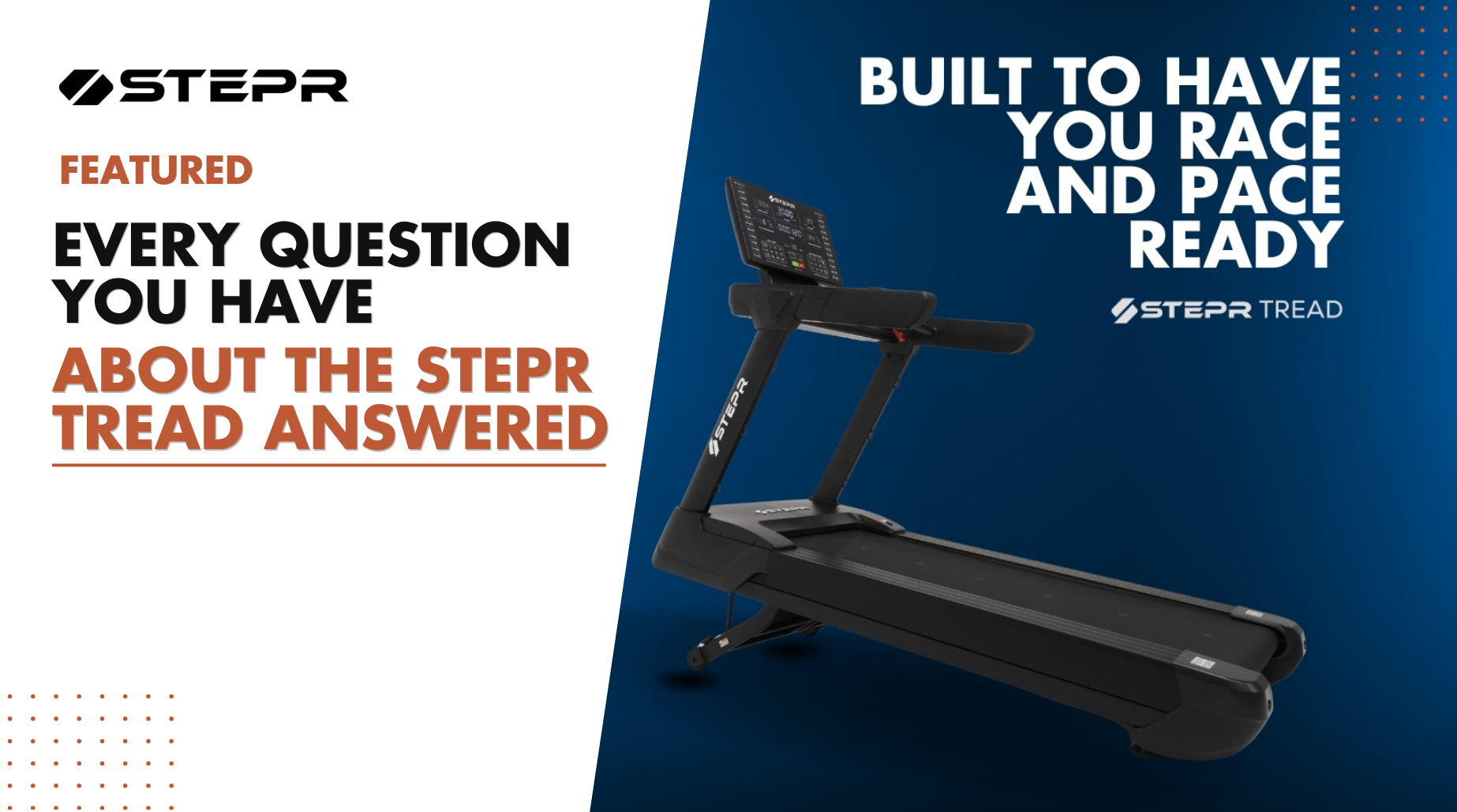
Every Question You Have About the STEPR TREAD Answered
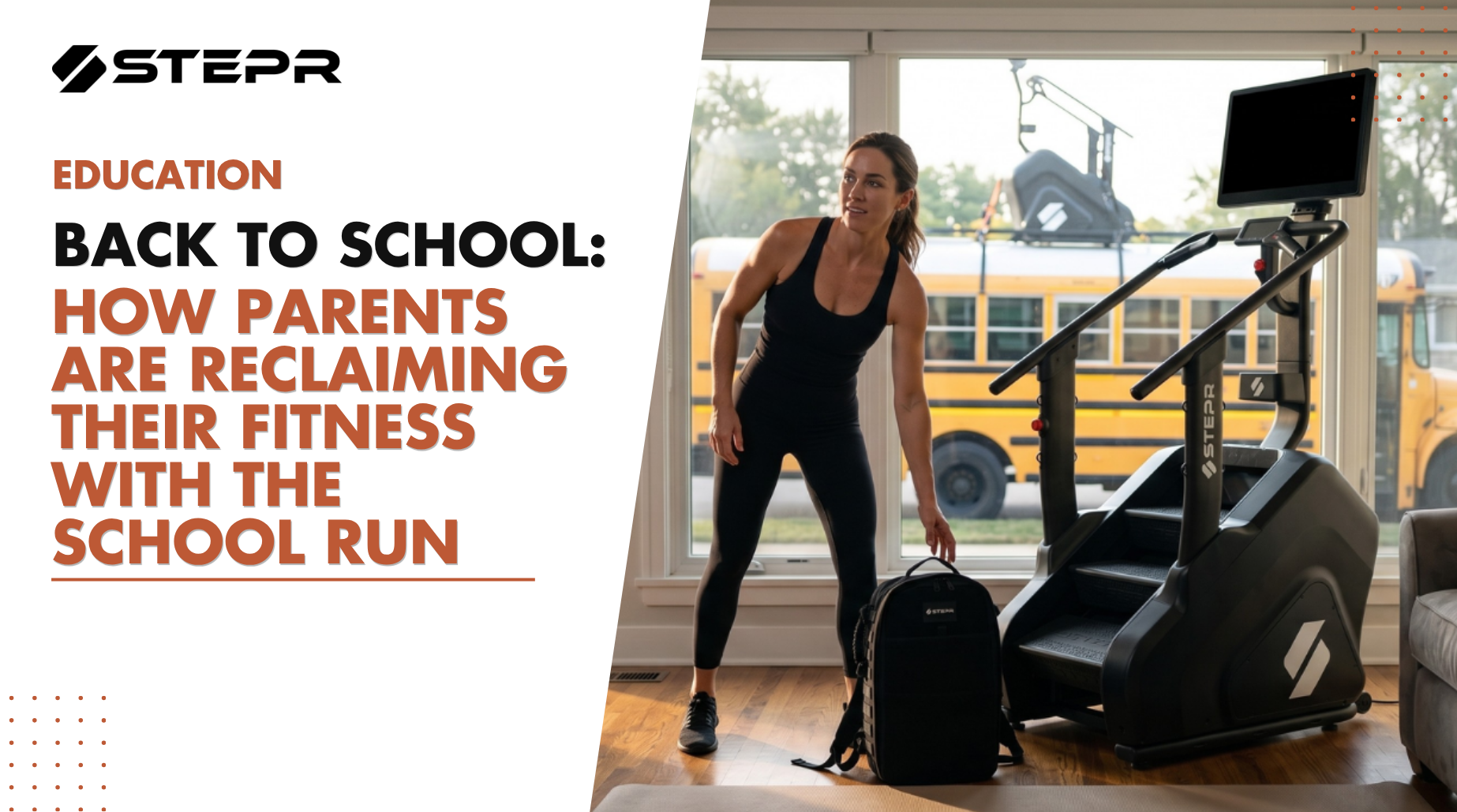
Back to School: How Parents Are Reclaiming Their Fitness With the School Run

The Equipment System Cameron Hanes and Joe Rogan Actually Workout With
Joe Rogan called it "the Echo Bike, but times two." Now Cameron Hanes is training with STEPR VPR™ in a hypoxic wellness studio. Here is what they are using and why the world's most relentless athletes keep choosing it.
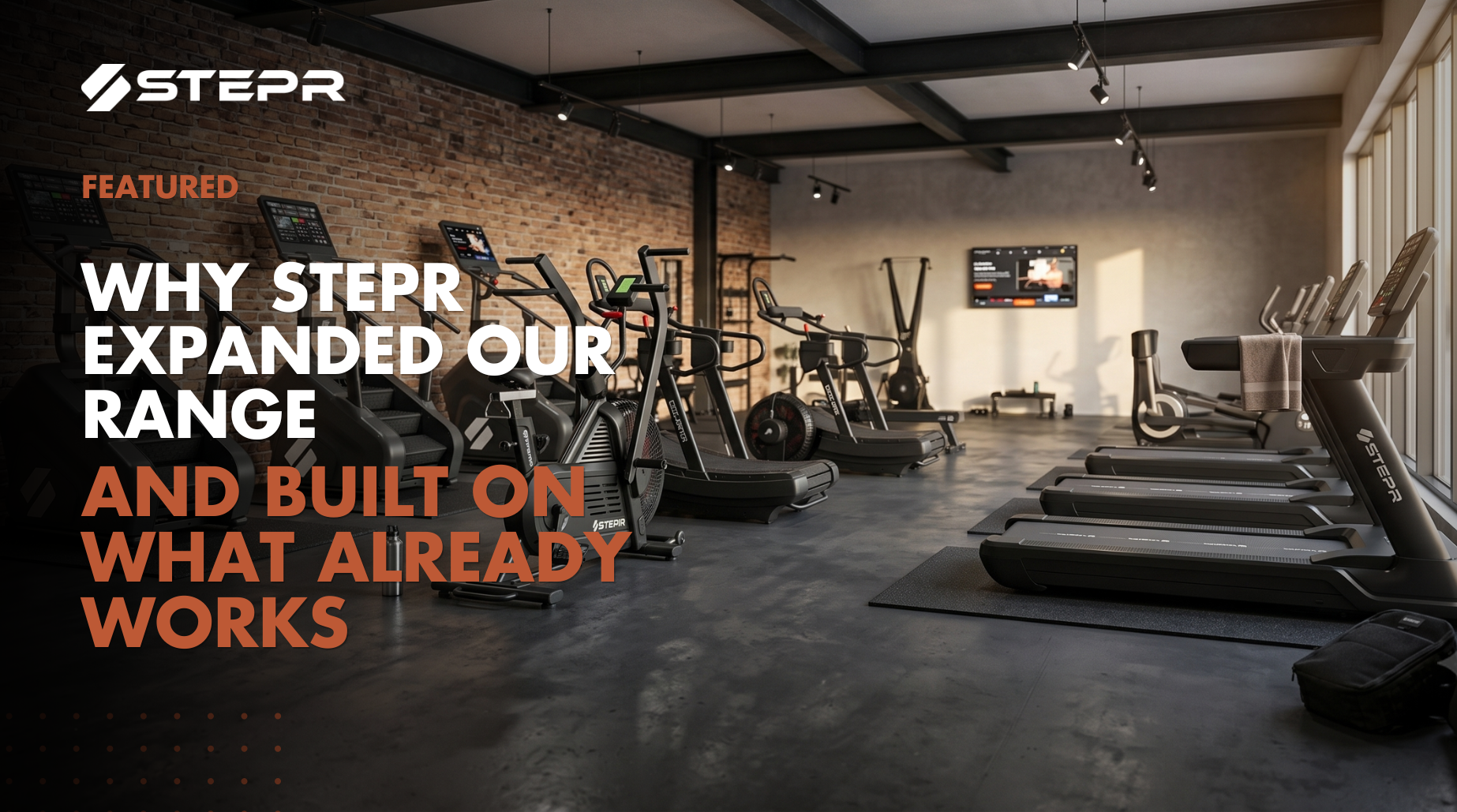
Why STEPR Expanded our Range and Built on What Already Works
STEPR was built on a simple premise: the most effective training modalities already exist. The question was never "what to invent from scratch" it was "how do we bring genuine innovation to what already works". Here is why the range looks the way it does.
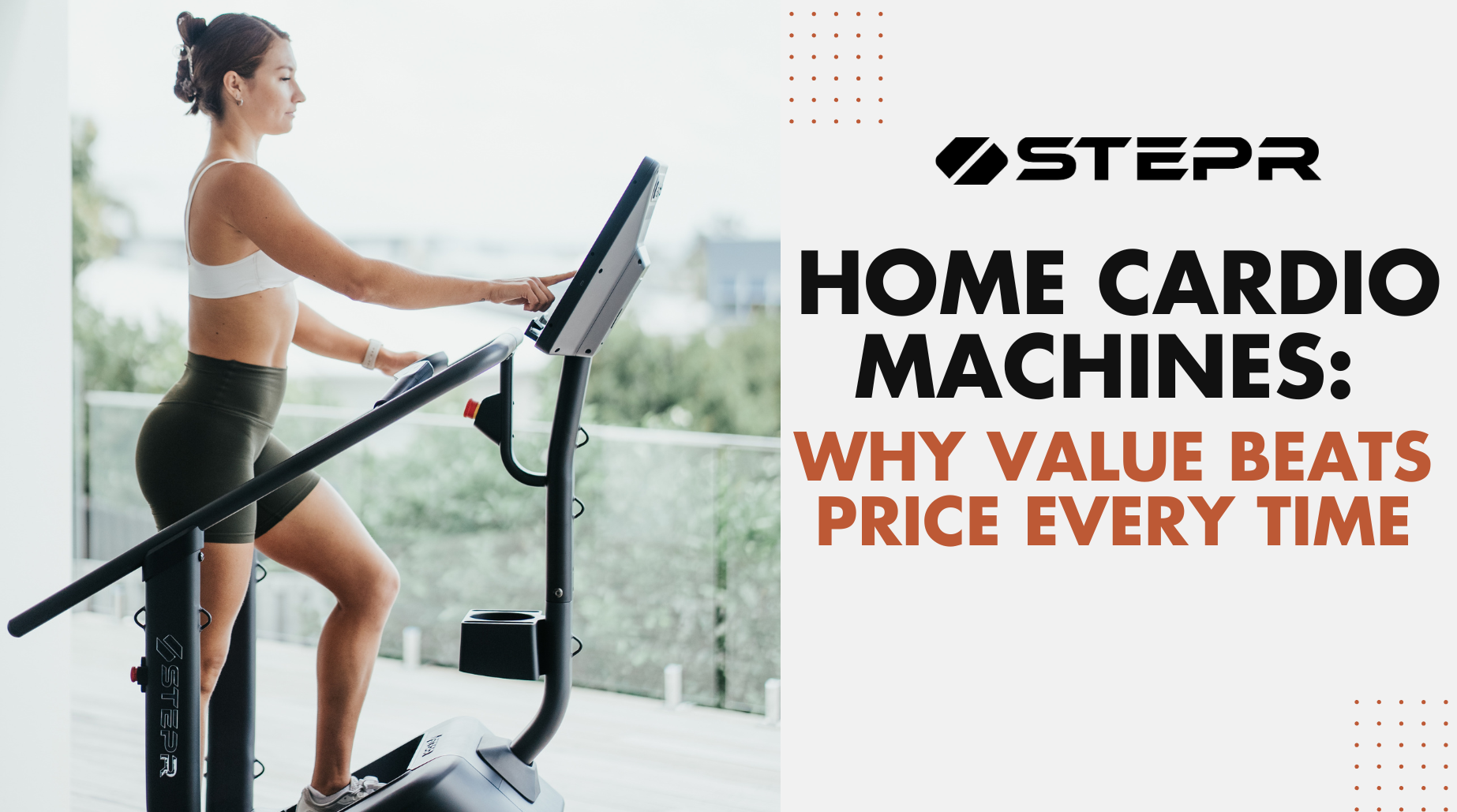
Home Cardio Machines: Why Value Beats Price Every Time

Why the Stair Climber Is the Hybrid Athlete's Secret Weapon
STEPR Community Surpasses 500 Million Steps: A Milestone Worth Celebrating
Why the UFL Chose STEPR to Train Its Professional Athletes
The 45-7-6 Stair Climber Workout: What the Science Says

It's Our Anniversary: Celebrating STEPR's Biggest Birthday Yet

STEPR Partners with CrossFit Semi-Final Legends Championship in California