STORE FINDER


STEPR Bionic Bike XL VPR™: The Bike Built for DEKA and Serious Athletes
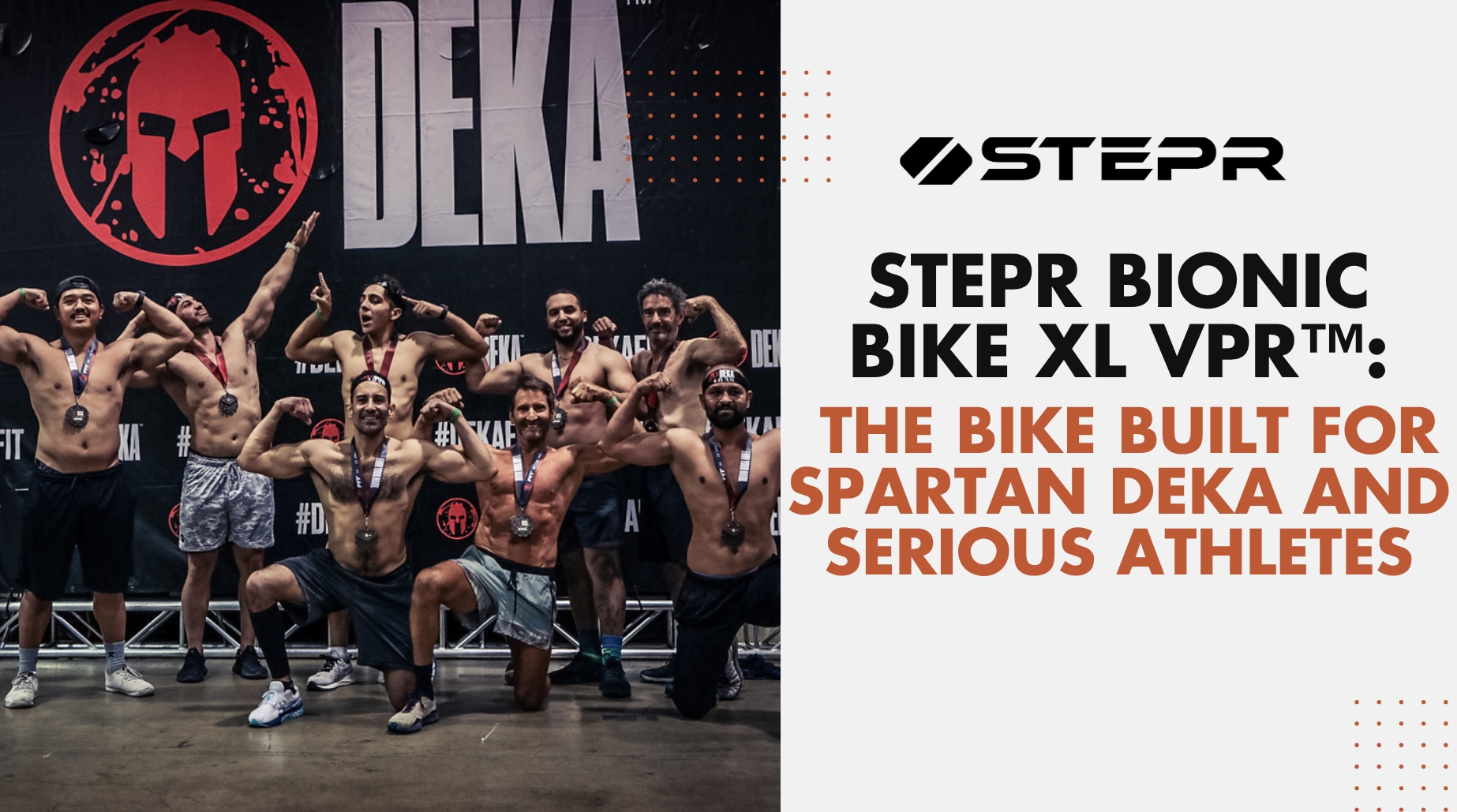
Spartan DEKA doesn't care about your warm up. It cares about 25 calories on an air bike in Zone 7, with your legs already burning from a farmer's carry and a 500 metre run waiting on the other side. That's the environment the STEPR Bionic Bike XL VPR™ was built for and at the latest Spartan DEKA event, it proved why.
This wasn't a sponsored placement or a logo on a banner. The Bionic Bike XL was a live station on a competitive course, absorbing maximum output from athletes chasing personal bests in one of the fastest growing hybrid fitness competitions on the planet. The bike didn't just survive it. It redefined what athletes expected from an air bike.
Why Every Standard Air Bike Has the Same Problem:
The traditional air bike has been a fixture in CrossFit boxes, HYROX training facilities and garage gyms for decades. It works. Nobody disputes that. But it operates on exactly one variable: your speed. Go faster, get more resistance. That's the entire system. Athletes and coaches have called it the "wind wall" for years because that's precisely what it is, a wall of resistance that responds only to how hard you push, with no way to separate load from cadence.
For athletes training for Spartan DEKA, HYROX, or any competition that demands precision conditioning across multiple energy systems, that limitation matters more than most people realise. Zone 7 of DEKA FIT requires 25 calories on the air bike. How those calories come out, whether you sprint them in one explosive effort or manage your pace to protect your output for the remaining three zones, is a tactical decision. On a standard air bike, you have almost no mechanical control over that tactic. You just go harder or go easier, the STEPR Bionic Bike changes that equation.

What VPR™ Technology Actually Does:
VPR™ stands for Variable Pitch Resistance. It's a patented system that allows athletes to physically adjust the angle of the fan blades via an intuitive dial, changing how air moves through the system at any given speed. The result is over 100 seamless virtual gears that the athlete controls, not the machine.
In practice, this means two athletes of completely different sizes, strength levels, and competition goals can use the same bike at the same cadence and experience entirely different training stimuli. A DEKA competitor who wants to grind through Zone 7 at a heavy, low-RPM load can dial it in. An athlete who wants to spin through 25 calories as efficiently as possible and protect their legs for what comes next can find their exact sweet spot and hold it. Neither athlete is forced into the wind wall's single dimension.
VPR™ For Strength: Dial up the resistance for a heavy, grinding power session that builds the kind of posterior chain capacity that pays dividends on sled pushes and tank pulls later in the course.
VPR™ For Endurance Pacing: Set it to a managed resistance level for a smooth, sustainable cadence that gets you through the calorie target without destroying your running legs.
VPR™ For Max Output: Combine peak resistance with explosive speed for an all out metabolic sprint that mirrors the physiological demands of elite competition.
This is the same tactical control that HYROX athletes have been using the VPR™ system to gain in training. The ability to isolate specific energy system demands and train them precisely, not just hammer everything at once and hope it transfers.

How the Bike Actually Feels Under Load:
Technical specs matter. But for athletes who have trained hard on air bikes, what matters just as much is what the machine feels like at the moment of peak fatigue, mid Zone 7, with two stations still to go.
The Bionic Bike XL uses a weighted flywheel to create true rotational inertia. As momentum builds, the flywheel stores that energy and returns it through the pedal stroke, creating a sensation that riders describe as the machine working with them rather than against them. Compared to magnetic resistance systems, which many competitive athletes find artificially limiting at high outputs, and chain driven bikes that can feel choppy and disconnected, the flywheel system produces a continuous, organic feel that's closer to running or rowing than most air bikes can claim.
When your legs are already carrying fatigue from a row, a farmer's carry, and a 500 metre run, a machine that flows with your movement rather than fighting it is the difference between a strong finish and a blown up Zone 7.
From Joe Rogan to the DEKA Arena:
Before the DEKA debut, the Bionic Bike XL had already earned one of the more credible endorsements in the fitness world. Elite athlete and hunter Adam Greentree took the bike onto The Joe Rogan Experience. After watching Greentree push it, Joe Rogan called it an outstanding machine, specifically comparing it to the Echo Bike and noting it operated on a completely different level. "It's like the Echo Bike but times two," was how Rogan put it.
That comparison is telling. Rogan is a serious training enthusiast who has spent thousands of hours on standard air bikes. And when someone with that amount of reference calls a machine 'f***ing awesome', I think it's safe to say he feels strongly about it.
The commercial grade engineering behind that reaction is substantial. The Bionic Bike XL is built on a welded steel frame, weighs 168 lbs (76 kg), and is covered by a commercial warranty including 10 years on the frame, 3 years on parts, and 2 years on labour. It's engineered for the kind of daily, multi athlete, high intensity use that competition training environments demand.

Built for the Course, Not Just the Home Gym:
On a Spartan DEKA course, the equipment has to perform the same way for the first athlete of the day and the last. There is no tolerance for wobble, inconsistency, or mechanical drift under load.
The Bionic Bike XL's dual position handlebars allow athletes of any frame size from around 5 feet to 6'5" to find their optimal power transfer posture quickly, without wasting competition seconds on setup. The belt driven system ensures smooth, consistent operation and minimal maintenance. These details aren't incidental. They're the difference between equipment that performs in training and equipment that performs on a competition floor.
The Spartan DEKA event confirmed what HYROX athletes and Joe Rogan had already said in different ways: the STEPR Bionic Bike XL VPR™ is not a better air bike. It's a different category altogether. If you're training for DEKA FIT, HYROX, CrossFit, or any competitive format that demands intelligent, targeted conditioning, the wind wall isn't enough anymore.
FAQ's:
What is Zone 7 in Spartan DEKA and why does the air bike matter so much?
Zone 7 in DEKA FIT requires athletes to complete 25 calories on an air bike after having already completed six other demanding stations, each preceded by a 500 metre run. By the time athletes hit the bike, their legs, lungs, and grip are already under serious load. How efficiently an athlete completes those 25 calories determines how much they have left for the three zones that follow, including the tank push/pull and RAM burpees. The air bike is one of the most physiologically demanding stations on the course precisely because it's a full body effort that punishes athletes who haven't trained their pacing strategy as much as their raw output.
How does the STEPR Bionic Bike XL VPR™ compare to the Assault Bike and Rogue Echo Bike?
The Assault AirBike and Rogue Echo Bike are both well-built machines that have earned their place as competition standards. The fundamental difference is the resistance system. Both operate on the traditional wind-wall principle: resistance scales only with speed, and there's no way to adjust load at a given cadence. The STEPR Bionic Bike XL VPR™ adds a second variable via its patented VPR™ dial, giving athletes over 100 resistance levels that can be set independently of speed. This is what allows athletes to train specific energy system demands rather than just going harder. Joe Rogan, who has trained extensively on the Echo Bike, described the Bionic Bike XL as operating on an entirely different level. For athletes who train with precision and compete seriously, VPR™ is a meaningful upgrade. For athletes who want a proven, lower-cost fan bike, the Assault and Echo remain solid options at lower price points.
Can I use the STEPR Bionic Bike XL VPR™ to train specifically for HYROX?
Yes, and a growing number of HYROX athletes are doing exactly that. While HYROX doesn't include an air bike station in its race format, the Bionic Bike XL is used by HYROX athletes for conditioning work, Zone 2 aerobic base building, and high intensity intervals that replicate the metabolic demands of back to back race stations. The VPR™ system's ability to dial in precise resistance levels makes it particularly useful for periodised HYROX training programs, where athletes need to match effort levels to specific training phases rather than just going all out every session.
Is the STEPR Bionic Bike XL VPR™ suitable for home gym use or is it only for commercial facilities?
It's engineered to commercial specification, which means it's built well beyond what home use demands. The 168 lb welded steel frame, belt driven system, and 10 year structural warranty were all designed for high volume, multi athlete commercial environments. For a home gym athlete, that translates to a machine that will outlast virtually any training program you put it through. Dual position handlebars accommodate athletes from approximately 5 feet to 6'5", and the belt drive keeps operation smooth and quiet compared to chain driven alternatives.
What does the VPR™ warranty cover and why does it matter for a competition athlete?
STEPR's commercial warranty on the Bionic Bike XL covers 10 years on the frame, 3 years on parts, and 2 years on labour. For a competition athlete, this matters because training for events like DEKA and HYROX involves high frequency, high intensity sessions across long training cycles. A commercial warranty means the machine is certified for that level of use, you're not voiding coverage by actually training hard on what you bought.
Can the STEPR Bionic Bike XL VPR™ be used for active recovery and rehabilitation as well as competition training?
This is one of the more significant advantages of the VPR™ system. Because resistance can be dialled down to an exceptionally low level, the Bionic Bike XL works well for active recovery sessions, upper body only rehabilitation work, and controlled low intensity conditioning. A standard air bike at minimal effort can feel uncontrolled and inconsistent. The VPR™ system makes the low end of the resistance range as precise and manageable as the high end, which is why the bike is used in clinical rehabilitation settings as well as elite competition prep.
Where is the STEPR Bionic Bike XL VPR™ available globally?
STEPR ships the Bionic Bike XL to the USA, Australia, the UK, Germany, Spain, France, Italy, Ireland, UAE, and additional countries. It's also stocked through major retailers including Rogue Fitness and Dick's Sporting Goods in the USA. Financing options with 0% APR over 12, 24, or 36 months are available through Affirm at checkout. For international buyers, STEPR's website has current shipping details and regional support contacts.

Explore the Full STEPR Range | Find out about VPR Technology | FREE STEPR Matchmaking Quiz | Discover More STEPR Blogs and Helpful Tips | Invest in STEPR
[Or Click the Button Below to Shop Now]

STEPR Blog posts
Every Question You Have About the STEPR TREAD Answered
Back to School: How Parents Are Reclaiming Their Fitness With the School Run
The Equipment System Cameron Hanes and Joe Rogan Actually Workout With
Joe Rogan called it "the Echo Bike, but times two." Now Cameron Hanes is training with STEPR VPR™ in a hypoxic wellness studio. Here is what they are using and why the world's most relentless athletes keep choosing it.
Why STEPR Expanded our Range and Built on What Already Works
STEPR was built on a simple premise: the most effective training modalities already exist. The question was never "what to invent from scratch" it was "how do we bring genuine innovation to what already works". Here is why the range looks the way it does.
Home Cardio Machines: Why Value Beats Price Every Time
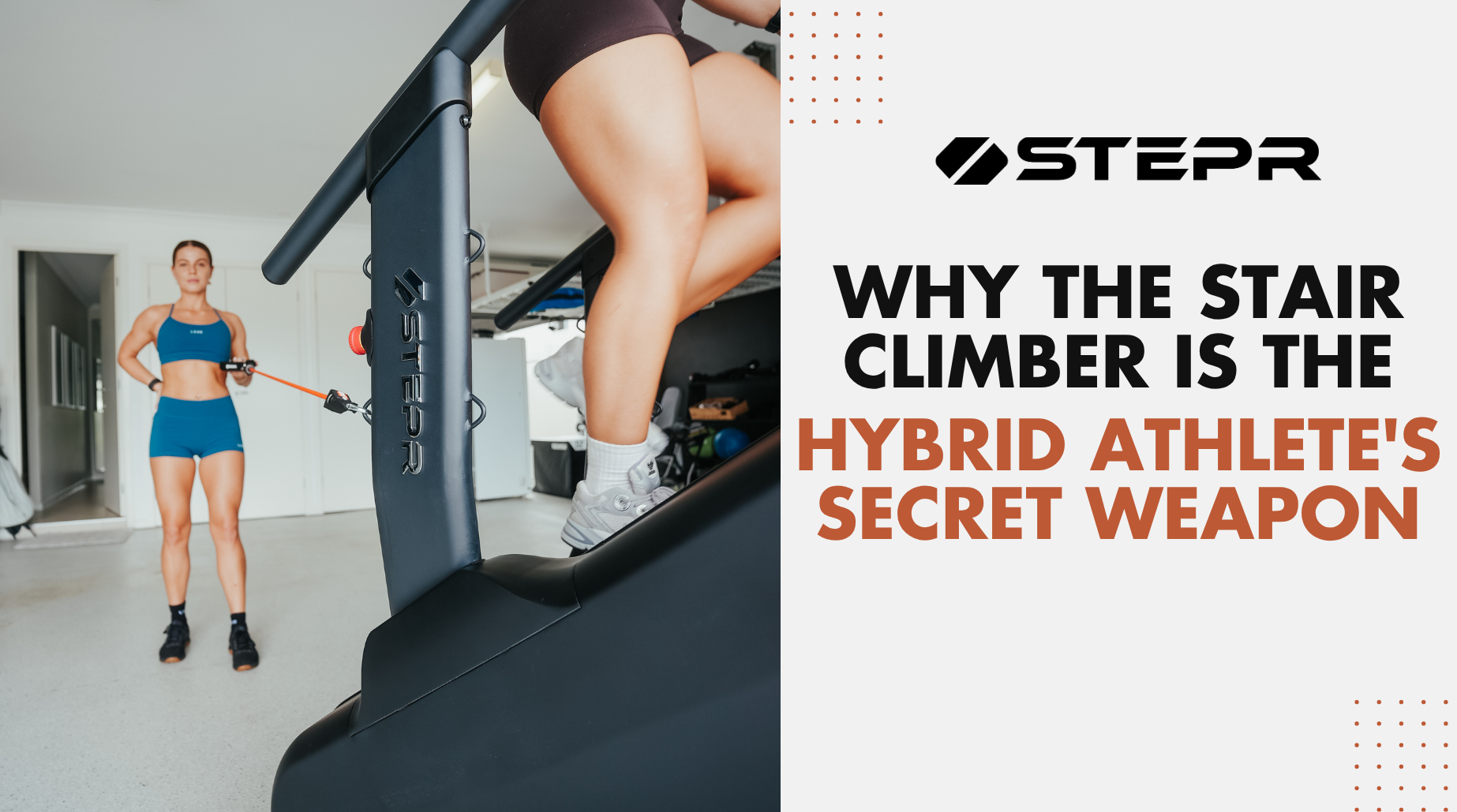
Why the Stair Climber Is the Hybrid Athlete's Secret Weapon
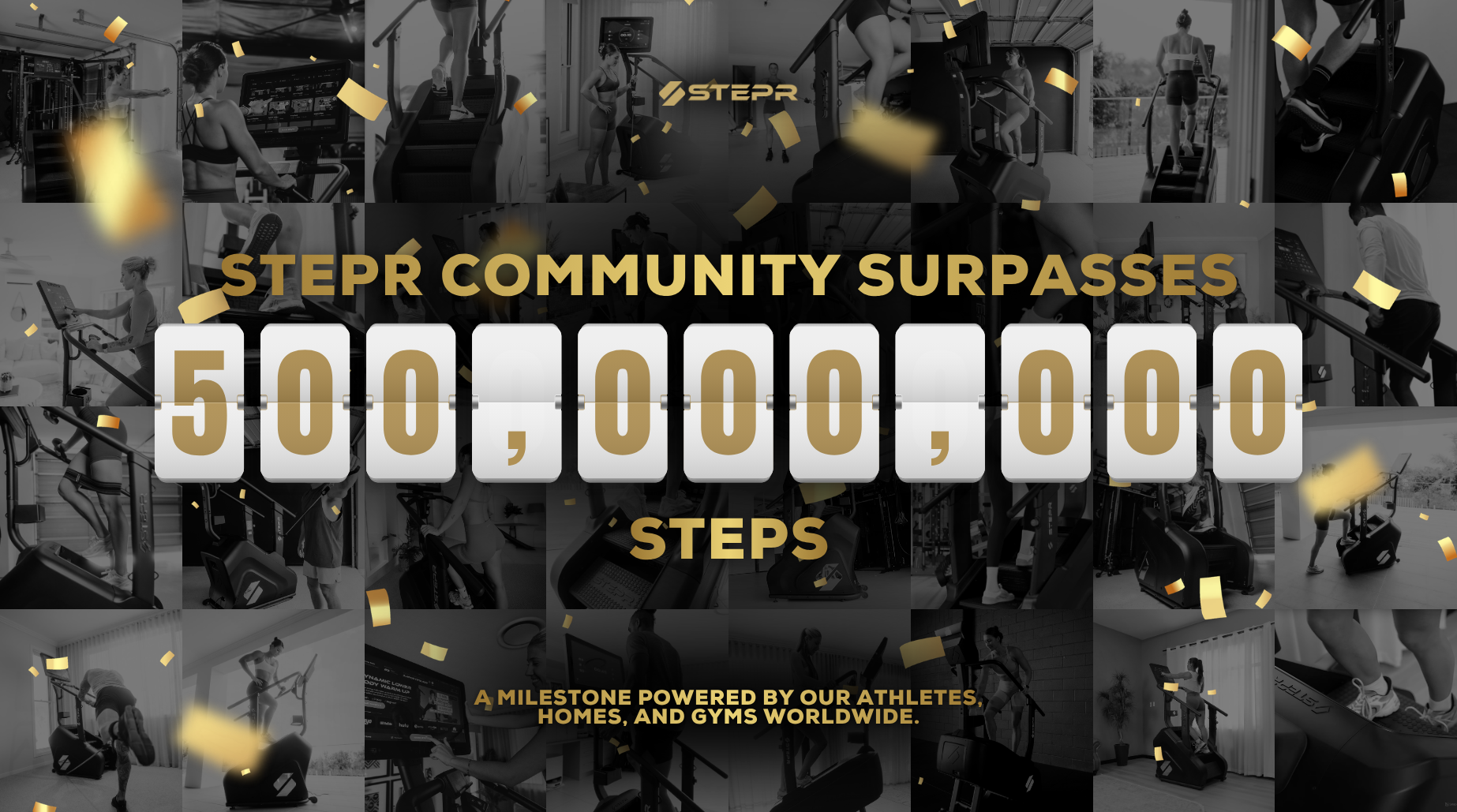
STEPR Community Surpasses 500 Million Steps: A Milestone Worth Celebrating
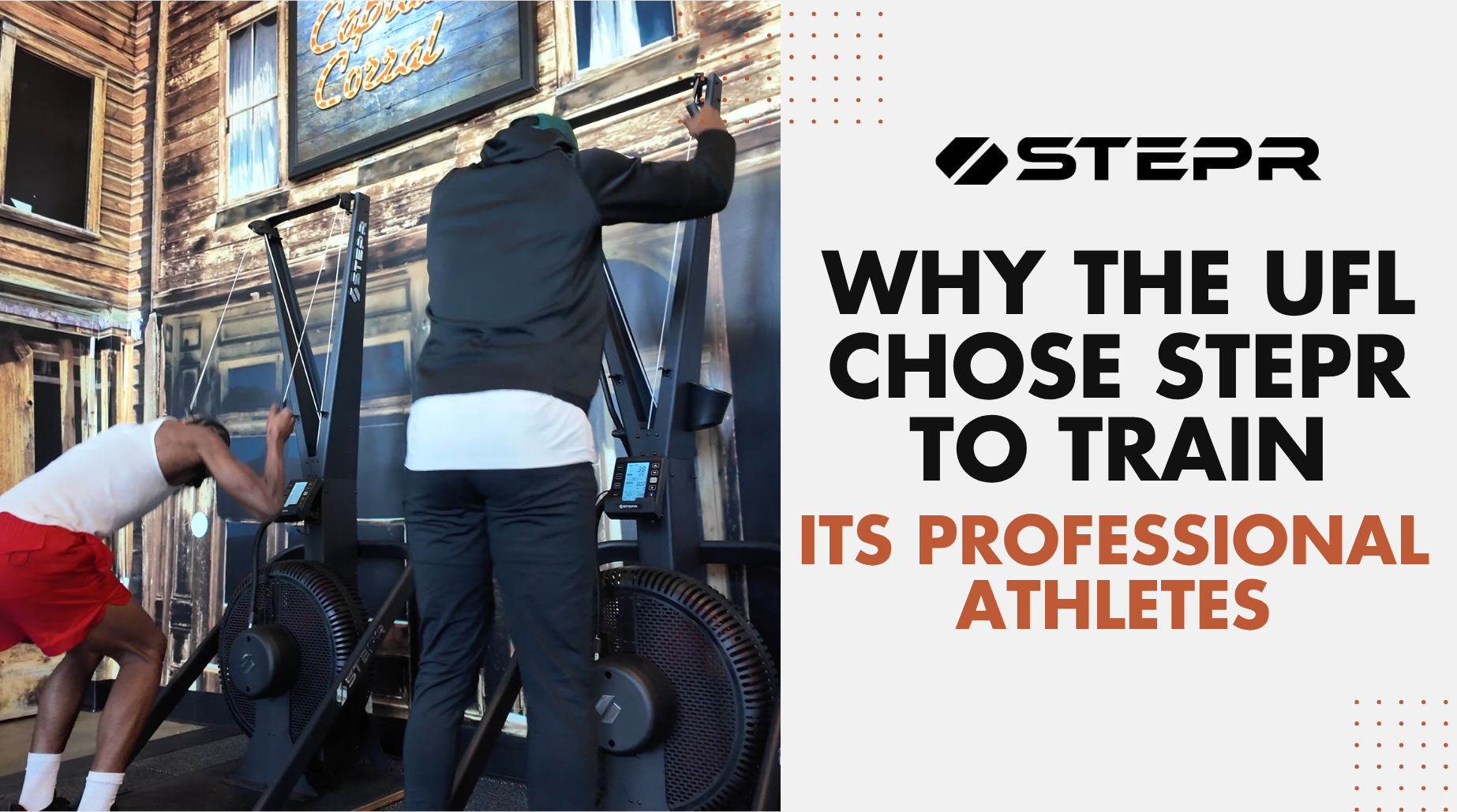
Why the UFL Chose STEPR to Train Its Professional Athletes
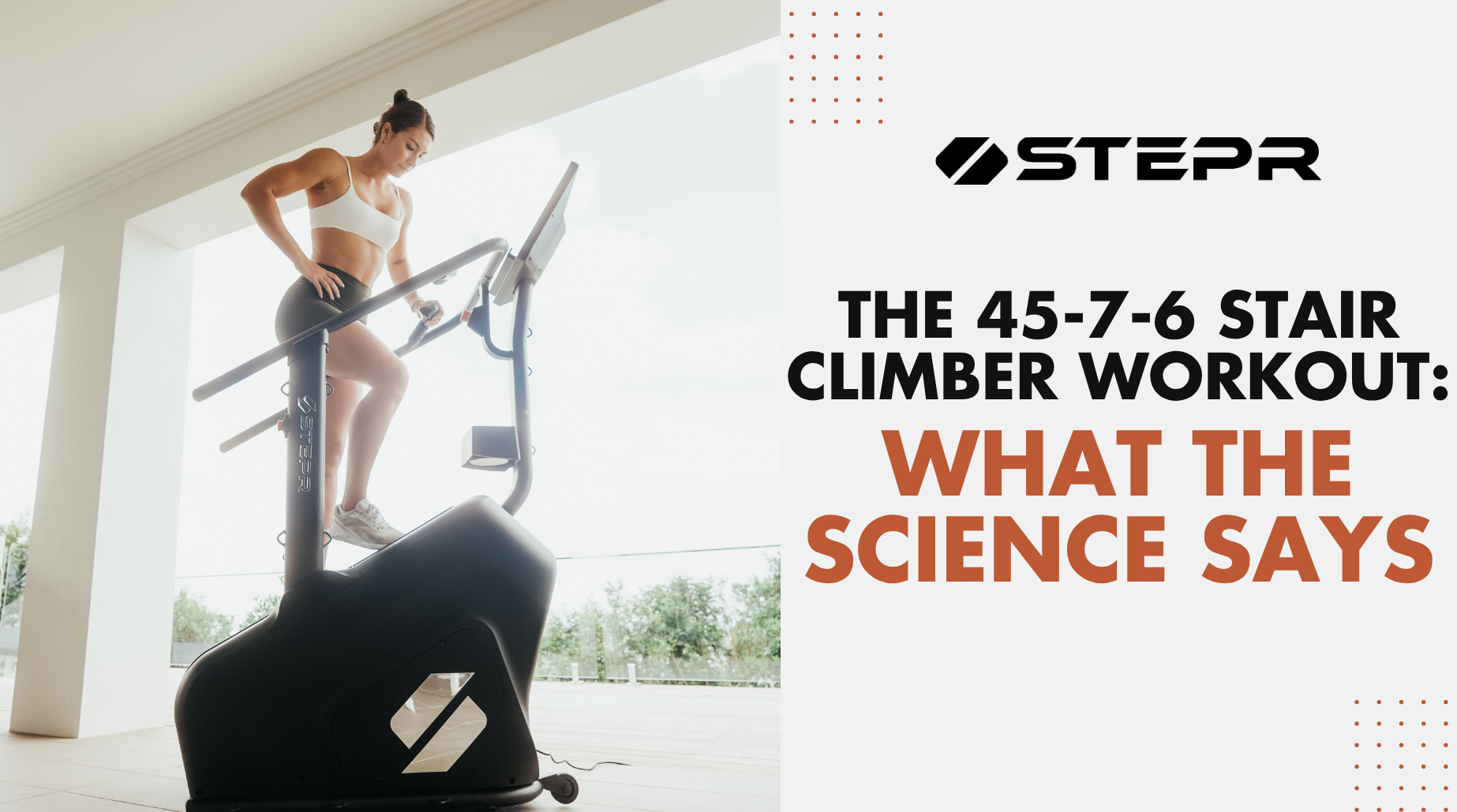
The 45-7-6 Stair Climber Workout: What the Science Says

It's Our Anniversary: Celebrating STEPR's Biggest Birthday Yet
STEPR Partners with CrossFit Semi-Final Legends Championship in California