STORE FINDER


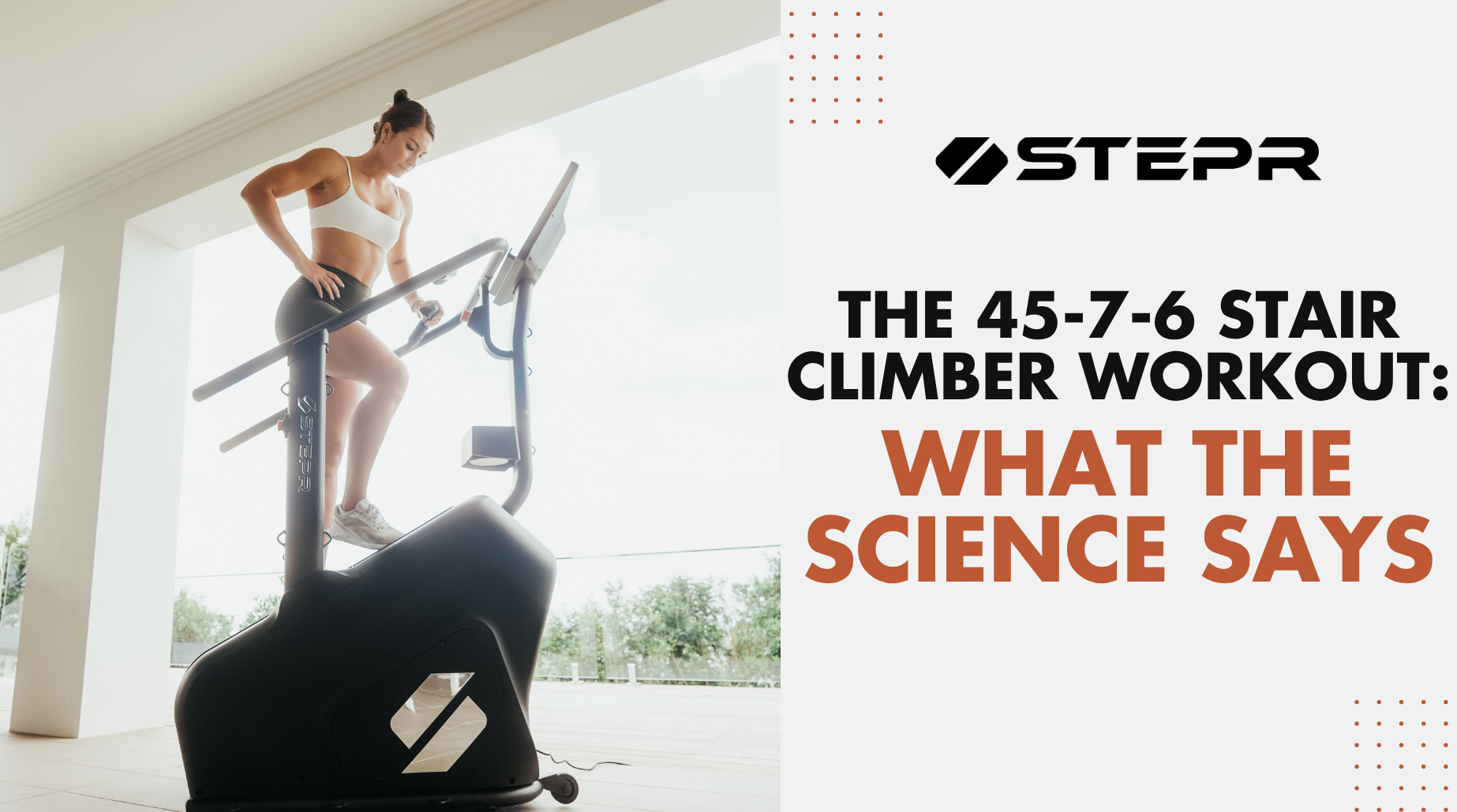
The 45-7-6 Stair Climber Workout: What the Science Says
The 45-7-6 stair climber workout is currently at breakout status on Google, meaning search volume has grown more than 5,000% in recent months.
That kind of trajectory usually means one of two things: either a genuinely effective training method has found its moment, or a social media aesthetic has been mistaken for a training programme. With the 45-7-6, the answer is more nuanced than either camp will tell you.
The workout itself is straightforward: 45 minutes on a stair climber, level 7, six days a week. The transformation photos are real. The before and after results that launched the trend are real. What is often missing from the conversation is why those results happened, and whether the protocol as stated is actually the most effective way to achieve them.

Where the results come from
The people seeing compelling transformations from the 45-7-6 are almost always people who were previously sedentary or inconsistently active. For that population, 45 minutes of sustained stair climbing six days a week represents an enormous increase in weekly cardiovascular output. The results follow from that increase, not from any specific magic in the level or the duration or the frequency number.
Stair climbing at sustained moderate intensity burns between 11 and 16 calories per minute for most adults. Across 45 minutes, that is 500 to 720 calories per session. Over six sessions a week, that is a meaningful weekly energy expenditure that most people have never previously sustained. Combined with the calorie-tracking and diet awareness that typically accompanies any focused training protocol, the deficit adds up.
This is good news and a caveat simultaneously. The results are real, but they are attributable to the total cardiovascular load, not to level 7 being the optimal resistance for every body.

The level 7 problem
Here is what the viral version of this workout does not address: level 7 on one machine is not level 7 on another.
Resistance levels across different stair climber brands and models are not standardised. Level 7 on a commercial gym machine with a heavy flywheel and a tall step height represents a fundamentally different cardiovascular demand than level 7 on a lighter machine with a shorter step cycle. For a 60 kilogram person with strong cardiovascular fitness, level 7 on most machines will not be sufficient to produce meaningful aerobic adaptation. For a heavier, unconditioned individual, level 7 could represent an overreach.
The viral workout prescribes a number because numbers travel well on social media. What matters physiologically is the percentage of maximum heart rate you sustain across those 45 minutes. For aerobic base building and fat oxidation, that should sit between 60 and 75% of your maximum heart rate. For sessions that push cardiovascular ceiling, it should reach 80 to 85%. The level is a proxy for that. It is not the thing itself.

Six days a week: too much or the right amount?
The frequency question is the one most worth interrogating. Six days of moderate intensity stair climbing is a high training volume, particularly for someone starting from a low base. The research on cardiovascular training frequency consistently supports 3-5 sessions per week as the effective range for most people, with additional sessions producing diminishing returns unless recovery is aggressively managed.
Six days is not dangerous for most healthy adults at the right intensity. But it leaves very little room for the strength training that would actually maximise the body composition results the trend promises. Glute development, which is key to the 'booty builder' outcomes the 45-7-6 is famous for, requires progressive resistance training, not just sustained cardio. Stair climbing activates the glutes. It does not grow them at the rate that loaded hip hinges and squats do.
The most effective version of this trend is not six days of stair climbing in isolation. It is three to four days of stair climbing alongside two days of targeted strength training, with one full recovery day. That combination produces the cardiovascular adaptations and the muscular development that the transformation photos suggest, rather than just the cardiovascular adaptations alone, remember social media is only what people want you to see. Take everything with a grain of salt and always conduct your own research based on your own body & goals to ensure your desired outcome.
What actually makes the protocol work long term
The 45-7-6 has a structural problem beyond frequency: it does not include progression. You do the same level, the same duration, the same frequency, indefinitely.
Your body will adapt to a fixed stimulus in three to five weeks. After that, the same session that produced results in week one is now maintenance work. The people who report plateauing after six to eight weeks of the 45-7-6 are experiencing a basic physiological reality: the stimulus has stopped changing, so the adaptation has stopped too.
An effective stair climbing programme builds in progressive challenge. Week one sits at a heart rate of 65% maximum. Week four at 70%. Week eight introduces interval style variation between 65 and 80%. The level or resistance increases as fitness improves. Duration stays roughly constant but intensity rises with capacity.
This requires a machine that can actually deliver that progression, which is where the choice of equipment becomes the deciding factor in long term results rather than just short term motivation.

Why the machine matters more than the protocol
The 45-7-6 works on a machine with genuine resistance range. It stalls on a machine that runs out of meaningful challenge after a few months.
STEPR was designed around this exact problem. The VPR™ resistance system provides over 100 levels of real-time scalable challenge, which means the progression a serious training programme requires is always available. When your fitness grows past what level 7 can offer, level 11 or 15 or 22 is there. The machine does not become your limiting factor. Your training capacity does.
The step height and movement pattern on STEPR also replicates commercial stair climber biomechanics rather than the compromised range of motion on cheaper home machines. That matters because the glute activation and posterior chain engagement that makes stair climbing visually effective as a training tool requires a full hip extension through each step cycle. Truncated steps reduce that engagement significantly.
If the 45-7-6 trend has convinced you that stair climbing is the training method you want to build around, that instinct is sound. The evidence for stair climbing as a cardiovascular and body composition tool is strong. The question is whether the machine you use, and the structure of your programme beyond the viral protocol, will deliver results that compound over months and years rather than plateau after eight weeks.

FAQ's:
What is the 45-7-6 stair climber workout?
The 45-7-6 workout is 45 minutes on a stair climber at level 7, performed six days per week. It originated on social media platforms in 2024 and reached breakout search status in 2025 to 2026 following viral before and after transformation posts. The results that drove its popularity are real but attributable primarily to the total weekly cardiovascular output the protocol creates, rather than anything specific about the level 7 or six day structure.
Does the 45-7-6 workout actually work?
For previously inactive people, yes. A consistent daily cardio commitment of 45 minutes at moderate intensity produces meaningful cardiovascular and body composition results over eight to twelve weeks. The protocol works because it creates a large increase in weekly energy expenditure for most people. It becomes less effective as fitness improves and the body adapts to the fixed stimulus, which is why progression beyond the basic protocol is necessary for long term results.
Is level 7 on a stair climber hard?
Level 7 represents different physiological demands on different machines. On commercial gym equipment with heavy flywheels and standard step heights, level 7 is a moderate intensity for most adults. On lighter home machines with shorter step cycles, it may be significantly easier. The relevant variable is not the level number but the percentage of your maximum heart rate you sustain across the session. Aim for 65 to 75% for aerobic base building and fat oxidation.
Can you do a stair climber every day?
Daily moderate intensity stair climbing is not harmful for most healthy adults but is not the most effective training structure for body composition results. Three to four days of stair climbing combined with two days of strength training and one recovery day produces superior outcomes compared to six days of cardio in isolation, because strength training is required to develop the muscular definition that stair climbing cardio alone cannot deliver.
Will a stair climber grow my glutes?
Stair climbing activates the glutes significantly, particularly when you avoid leaning heavily on the handrails and maintain an upright posture through each step. However, meaningful glute growth requires progressive resistance training: hip hinges, squats, and loaded movements that create the muscle damage and mechanical tension necessary for hypertrophy. Stair climbing is an excellent complement to a glute training programme. As a standalone tool, it will improve muscle activation and endurance but produce limited growth.
What is the best stair climber for the 45-7-6 workout at home?
The most important factor is resistance range. The 45-7-6 protocol uses a fixed level, but any training programme that outlasts the initial adaptation phase requires meaningful progression beyond that level. A machine with over 100 resistance levels and a full step height that replicates commercial stair climber biomechanics will continue to deliver results as fitness improves. Machines with 10 to 20 resistance levels typically plateau along with the user after the first few months.
Explore the Full STEPR Range | Find out about VPR Technology | FREE STEPR Matchmaking Quiz | Discover More STEPR Blogs and Helpful Tips | Invest in STEPR
[Or Click the Button Below to Shop Now]

STEPR Blog posts
Every Question You Have About the STEPR TREAD Answered
Back to School: How Parents Are Reclaiming Their Fitness With the School Run

The Equipment System Cameron Hanes and Joe Rogan Actually Workout With
Joe Rogan called it "the Echo Bike, but times two." Now Cameron Hanes is training with STEPR VPR™ in a hypoxic wellness studio. Here is what they are using and why the world's most relentless athletes keep choosing it.
Why STEPR Expanded our Range and Built on What Already Works
STEPR was built on a simple premise: the most effective training modalities already exist. The question was never "what to invent from scratch" it was "how do we bring genuine innovation to what already works". Here is why the range looks the way it does.

Home Cardio Machines: Why Value Beats Price Every Time
Why the Stair Climber Is the Hybrid Athlete's Secret Weapon
STEPR Community Surpasses 500 Million Steps: A Milestone Worth Celebrating
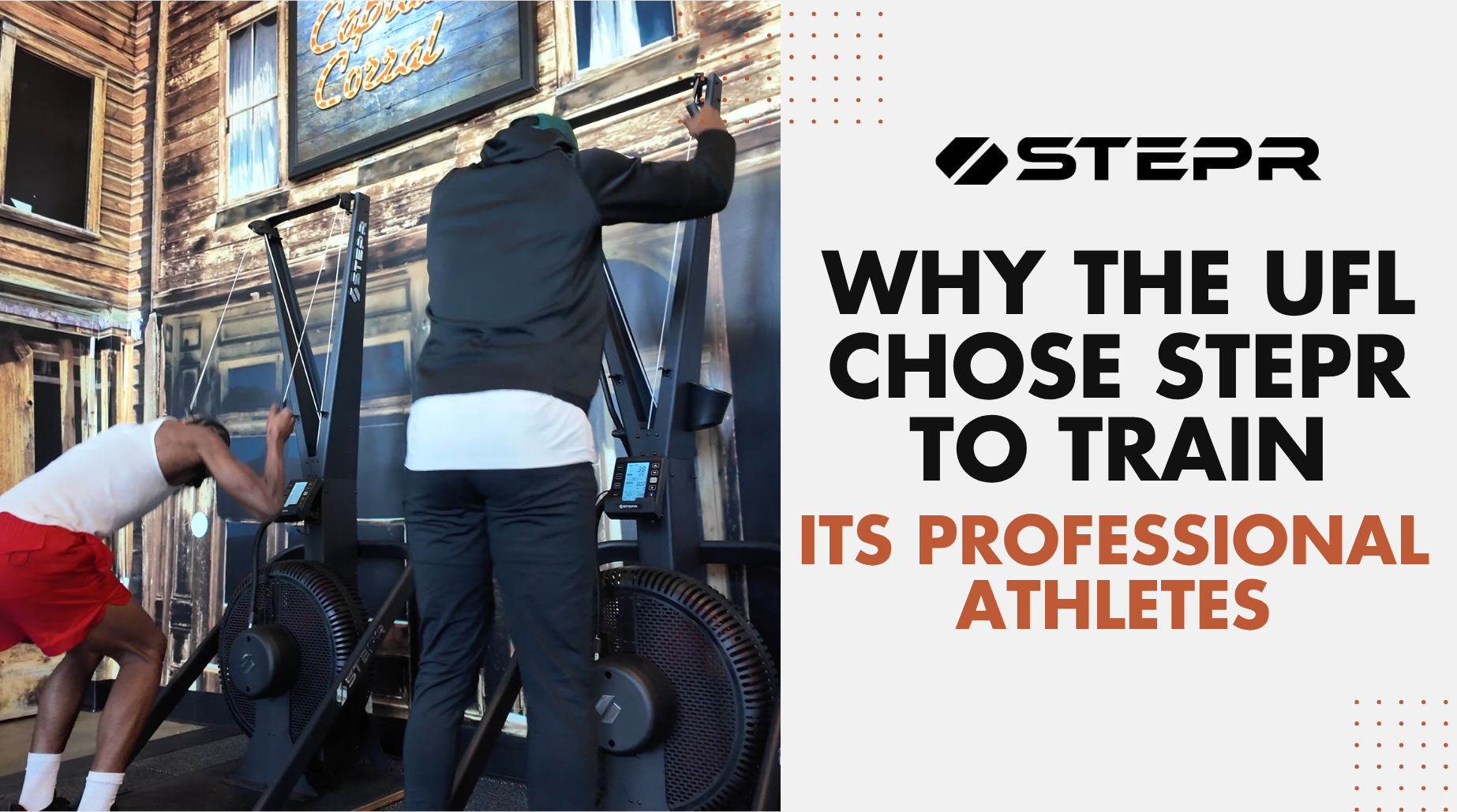
Why the UFL Chose STEPR to Train Its Professional Athletes
The 45-7-6 Stair Climber Workout: What the Science Says

It's Our Anniversary: Celebrating STEPR's Biggest Birthday Yet

STEPR Partners with CrossFit Semi-Final Legends Championship in California